
Why Moroccan Manufacturers Must Digitize (and Where to Start)
Eight out of ten Moroccan manufacturers still run production, inventory, and sales follow-ups on paper and Excel. Discover why 2026 is a decisive turning point and the exact five-step roadmap to start.

Direct Answer · Executive Summary
Eight out of ten Moroccan manufacturers still run production, stock, and sales on paper and spreadsheets, losing orders to faster digital competitors. Effective industrial digitization starts by cleaning product and pricing data, digitizing B2B quote workflows, automating follow-ups, and scaling into an ERP—delivering measurable ROI within 3 to 6 months.
Key Takeaways
- Wholesalers and procurement managers now shortlist industrial suppliers online before picking up the phone.
- Start by auditing and cleaning Excel product catalogs, price lists, and customer contact records before buying software.
- Digitize quote capture and automate follow-ups first to generate measurable cash flow gains in 3 to 6 months.
- Avoid brochure-only websites and big-bang automation; involve plant teams early and scale into an ERP when volume outgrows spreadsheets.
Table of Contents (5)
Executive Summary — Eight out of ten Moroccan manufacturers still rely heavily on paper, Excel spreadsheets, and phone calls to run production, inventory, and customer relationships. Digitizing does not mean abandoning factory machinery for a marketing website: it means, in exact order, making data reliable at the source, automating repetitive tasks, and moving teams and clients onto traceable digital channels. The first tangible returns arrive in 3 to 6 months, not 3 years.
What Digitization Means for a Manufacturer
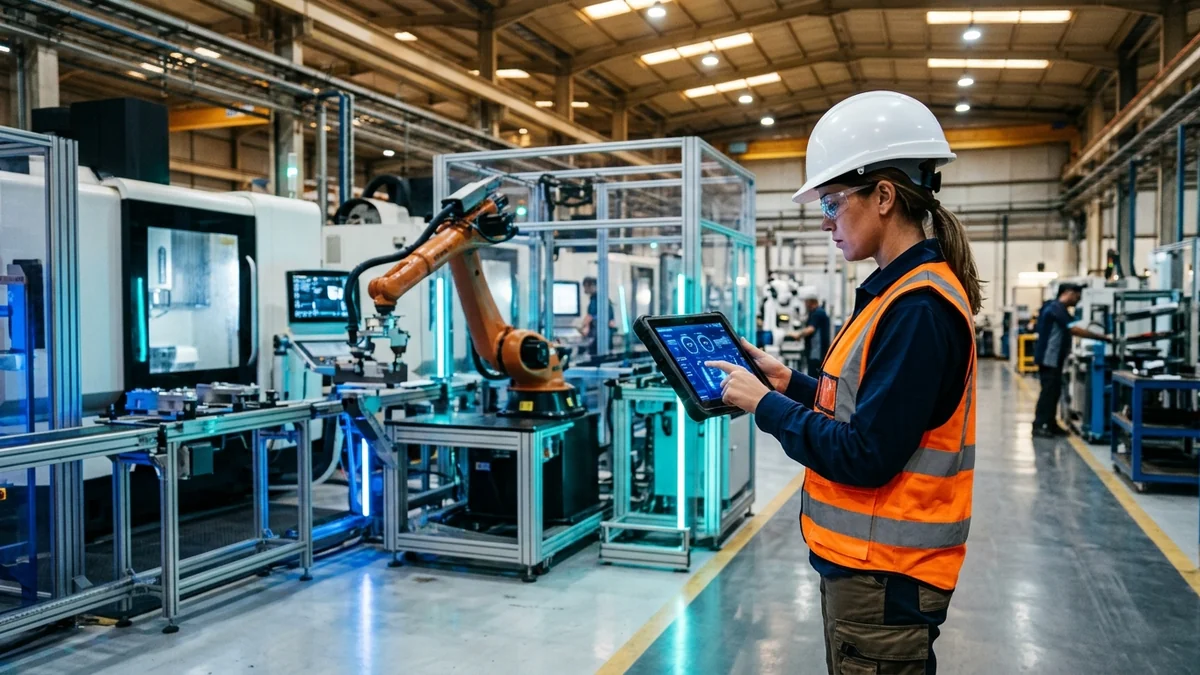
For an industrial manufacturer or agri-food producer, digitization means replacing manual processes—paper purchase orders, Excel tracking sheets, phone follow-ups, and visual stock counts—with integrated digital tools that produce reliable, shareable data: an ERP for operations management, a digital catalog or ordering portal, a CRM for customer tracking, and workflow automation for routine communications. The goal is never technology for its own sake; it is faster executive decisions and eliminating the hidden costs of manual work.
Why It Is Becoming Urgent in Morocco in 2026
The Tipping Point for Distributors and Online Ordering
Your buyers—wholesalers, distributors, and purchasing departments—now search for products online before picking up the phone. A manufacturer that remains invisible online is simply left off the supplier shortlist before contact is ever made.
Your Competitors Are Already Digitizing
Brands clinging solely to paper workflows are quietly losing market share. Buyers who cannot find your specifications online default to the competitor they find first.
A New Generation of B2B Buyers
Next-generation industrial managers and procurement officers compare suppliers online, expect structured quotes within 24 hours, and walk away from endless phone tag.
Key takeaway: digitization delivers ROI when it begins by fixing a genuinely painful operational bottleneck, not by launching a static brochure site.
How to Start, in Order (Without Breaking Operations)
- Audit your existing data: Map everything currently living in Excel and paper binders—SKUs, price lists, contacts, and orders. Clean, trustworthy master data is the foundation of every system.
- Digitize your commercial presence: Publish a clear digital product catalog with technical specifications and pricing structures that a distributor can evaluate in one minute.
- Track every quote request and order: Capture inbound requests via structured web forms, organized email intake, and a CRM so every opportunity becomes a tracked file and nothing slips through the cracks.
- Automate recurring follow-ups: Use automated workflows (CRM rules or n8n pipelines) to handle unanswered quotes, overdue payment reminders, and low-stock alerts without manual chasing.
- Manage growth with a right-sized ERP: Once order volume exceeds what spreadsheets can handle cleanly, deploy an ERP such as Odoo to centralize inventory, purchasing, manufacturing, and billing.
Mistakes to Avoid
- Confusing a brochure website with digitization: A website without quote capture or connected back-office data is just an expensive digital flyer.
- Trying to automate everything at once: Attempting a complete overnight overhaul fails within 30 days. Success comes from solving one high-friction workflow first and expanding systematically.
- Investing in software nobody uses: The best tool is the one your staff actually adopts on the floor. Involve operators early, train them progressively, and avoid overwhelming them.
What Next?
Digitization is a structured trajectory, not a one-off IT purchase. Start by identifying the single workflow costing your business the most time and errors today, and launch there. Every hour reclaimed from manual administration translates directly into faster decisions, fewer mistakes, and stronger customer retention.
NETREGIA supports Moroccan industrial and agri-food companies across this transition, from structured digital catalogs and workflow automation to full Odoo ERP integration. Request your digitization assessment to map out your highest-ROI starting point.
Practical Answers for Decision-Makers
How long does it take to digitize an industrial SME?
The first tangible gains arrive within 3 to 6 months when starting with a single bottleneck process. A complete transformation (ERP, e-commerce, and CRM) rolls out over 6 to 18 months depending on operational complexity.
Is a website enough for a manufacturer?
No. A website without quote request workflows or integration with your operational data only provides basic visibility. Real business value comes from connecting your storefront to pricing, order tracking, and CRM pipelines.
Where should we start if we are starting from zero?
First clean and standardize your product catalog and customer contact data, then digitize incoming quote requests. That first high-ROI workflow builds internal momentum for subsequent automation and ERP steps.
What budget is required to digitize a manufacturer in Morocco?
Budgets range from a few thousand to several tens of thousands of MAD depending on scope—starting with a catalog and CRM before scaling to an ERP. Starting small lets you prioritize the workflows currently costing the most.
What if my teams resist the new system?
Involve team members early when selecting tools, roll out training step by step, and highlight quick, visible daily wins. A practical tool adopted by 10 staff outperforms a theoretical ideal that nobody uses.
Ready to deploy: Odoo ERP Integration & DGI 2026 E-Invoicing
Our Casablanca engineering team delivers an actionable technical audit, clear architecture roadmap, and contractual ~5 min SLA response.
 6 min read
Best ERP in Morocco 2026: Odoo vs SAP vs Sage Comparison for SMEs
Compare Odoo, SAP Business One, Sage X3, Microsoft Dynamics 365, and ERPNext for Moroccan SMEs in 2026: MAD budgets, CGNC/VAT localization, DGI e-invoicing, and MOWAKABA funding.
 7 min read
Electronic Invoicing in Morocco in 2026: Complete Guide (DGI, ERP, Odoo)
Complete 2026 guide to mandatory electronic invoicing in Morocco under CGI Art. 145-IX: DGI phased rollout, structured formats, Odoo l10n_ma readiness, and MOWAKABA funding.
 5 min read
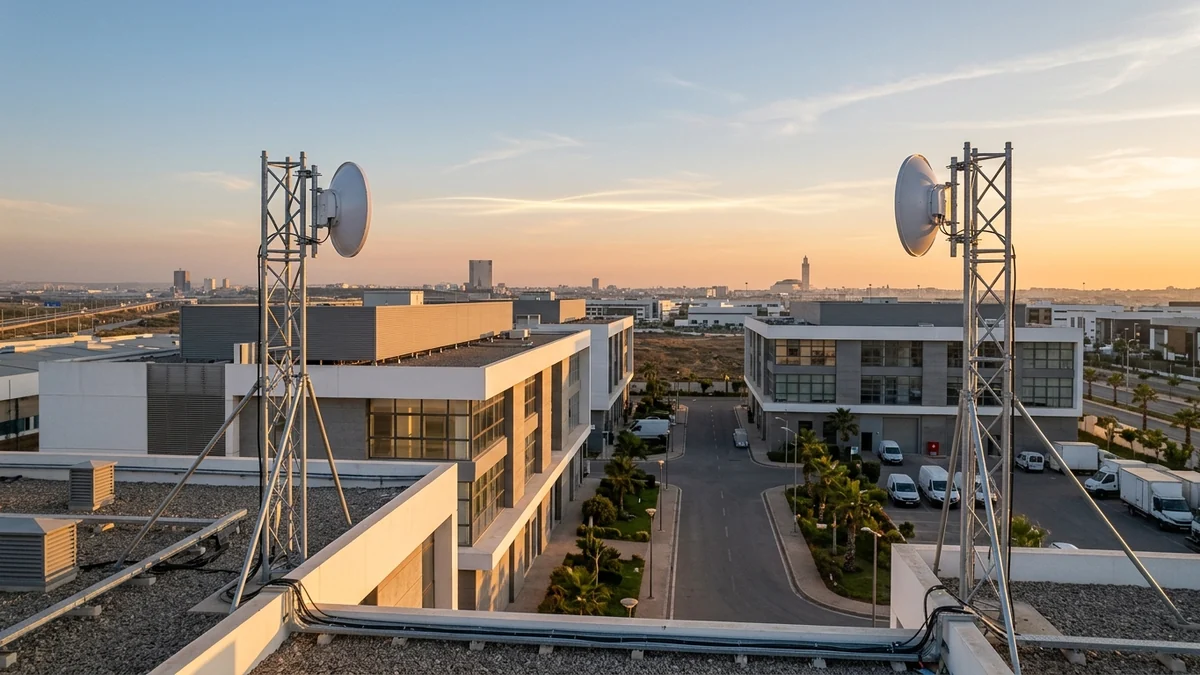
How to Connect Two Buildings Without Fibre?
Compare 5 GHz/60 GHz point-to-point radio bridges, optical links, and multi-WAN VPNs to connect two sites in Morocco fast without costly urban fibre trenching.